My tower of Babel collapsed approximately 100 days ago in my arms; it crossed a flatline bridge and became undone. I still struggle to pick up the pieces – between my duty to finish my Babel-inspired dissertation, baseless accusations, and unwelcome condolences. Each piece transforms into something incomprehensible, so alien, strange, and enraging. Each piece shrieks every night and squeals in the morning. Each piece travels into the land unknown to me and fails to create its own syntax. Language and words abandoned me the day my father died in my arms. Meanings have found no refuge in me the second I signed his death certification.
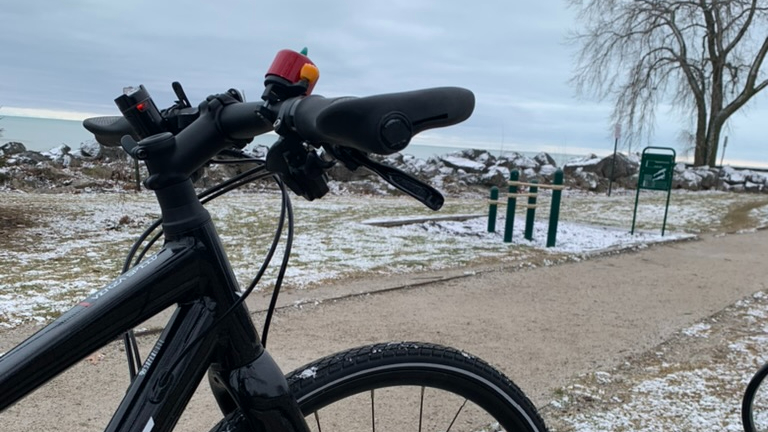
In Islam, a child cannot wail for their parent’s death, so my tears have rolled in silence. I can only show my sadness in the form of love because what is grief if not love persevering? Or is it? What one often forgets, love is only one form of persevering. The rest is shaped into sleepless nights clinging onto my father’s keffiyeh. The rest is transformed into dangerously numbing 20-mile biking even if it is -16oC. And recently: anger. A realization that life continues with its bullshits even when you are still unmoved from his hospital bed. From his piles of clothes that you actually do not want to give to others. From his old car that you always hate. From the last video call, when he assured you that he was going to be okay. He was not. He is dead.
How to deal with loss over someone who spoke your language so eloquently? Our jokes, our vocabularies, our exchanged glances when Mom scolded us. I feel like I could do anything as long as I got my father; maybe that is why my tower of Babel collapsed. Or it was lung failure – the effect of smoking two packs a day since you were 14 finally caught you up. I was my father’s Tower of Babel; he refused to die until I, his last piece of brick, sat next to him and read his favorite Quran chapter (Taha) and verses (Moses’ prayer to overcome hardship against the Pharaoh). We translated each other when someone could not decipher our anger or rambling.
When Ocean Vuong lost his mother, he said that he became a child again, trying to figure out how to navigate the world because he just lost his North Star. I too scramble on those Babel pieces of him here and there. What would Dad do? I kept asking myself as I tried to fix my flat tire in the middle of Wilmette, as I tried to order a cup of chocolate, as I encountered people I knew on the street, in the library, anywhere. Every encounter is a strange encounter, as it wakes me up from a liminal space where I feel my father’s presence and death simultaneously.
I enjoy spaces where I do not know the people; some biking groups have been helpful – we bike, and I don’t need to know who you are. I get paranoid about seeing people because I feel that anytime they can see me collecting destroyed pieces of myself behind my back. A proof of my arrogance, in thinking that I can continue living sufficiently like this with my father’s love for me and my mother. And they will ask questions. And I will feel the obligation to answer. I cannot lie. Even if I could, what would it do when you have lost your ability for pragmatics?
My parents and my aunts visited me during my fieldwork in North Sumatra in 2019. My father drove 10 hours from our hometown. Because my field host was so kind and caring, he gifted him with many things, including his lamb skin hat that he bought in Turkey. My father didn’t speak Toba, so my aunt translated to him. “Thank you for taking care of my daughter. She’s a piece of work,” my father laughed. My host also laughed.
When my parents finally went home to my maternal ancestral home 8-hour drive from my fieldwork, my host sat me down. “You promise me to respect and love your father, inang?” I said yes, I have always done it anyway. “No, you have to understand. Nobody else in this world is like him. A father could love his daughter so much. Your father’s love for you is beyond anything in this world. He loves you so much. He will do anything for you.” My host is the indigenous leader, a church elder and leader too, so I believed him and nodded, but I should have taken that more seriously. I just did not know how. Because later, everyone at the funeral reminded me of that. “Your father didn’t tell us, but we know he’s so proud of you.”; “He loves you so much, Putri.” No one can call me that name ever again. The final blow was from my mother when we finally could cry together, just the two of us. “For your father, nobody else in this world but you.”
I know. I know. I always know. And what’s left in these bricks and pieces is the memory of days long gone by, back when I was loved so much. Back when I had someone who constantly reminded me that I could be a child curiously asking questions every five seconds. That I deserve nothing less than devotion even in my difficulty. That I could be flawed, and I was loved, not despite that flaw. But because of.
[…]
Another country burning on TV
What we’ll always have is something we lost
In the snow, the dry outline of my mother
Promise me you won’t vanish again, I said
She lay there awhile, thinking it over
One by one the houses turned off their lights
I lay down over her outline, to keep her true
Together we made an angel
It looked like something being destroyed in a blizzard
I haven’t killed a thing since
“Snow Theory” from Ocean Vuong’s Time is a Mother (2022).
 Pravda Palma
Leave a comment