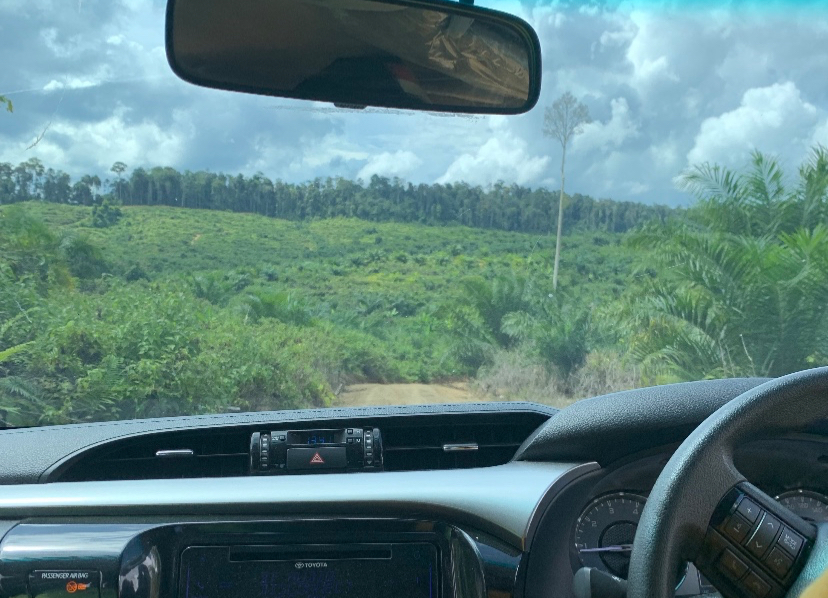
At first, I felt so odds & distressed with how my ethnography went. The first few months of my fieldwork have turned me away from plantations. I did this not out of spite, but as my commitment to problem-solving sociology. I am beyond lucky with the data access that I am currently working on — not everyday you can join a planning room where the shenanigans begin. Not everyday you are seen equal as a plantation manager/corporate GM whose words weigh more than they actually are.
It is surreal at its best, and damning at its worst. I cannot stop thinking about ethnographic positioning & self-reflection. (An attempt of) sitting and talking like a state is not an enjoyable experience by any means. My body takes more jabs than usual: endless headache, worsening chronic backpain, & heartburns. Insomnia — lots of it. It is a different kind of heartbreak. I am prepared for whatever grim realities that plantations can offer & have continuously generated. Never will I be ready for what plantation makers have to say about plantations’ future (assuming any).
How should one try to resolve a problem in which they belong to? How should one maintain their chin up when they know they are the problem in the room?[1] Every time a planner talks degradingly about indigenous people, my mind wandered to my grandmother and her crooked fingers, melted by rice husk in our highland huta of South Tapanuli. Her soothing, heavy Sipirok-accented Indonesian prayed for me going to school every morning. I came back to my amangboru’s wrinkled hands when he handed me a plate of horse meat which he prayed upon for my safe travel. All the upa-upas & tangiangs in the highland. Pushing back plantations in any forms.
In one of their book tours, Prof. Tania Li & Prof. Pujo Semedi emphasized the need to step back and make the familiar strange (an ethnography’s credo!). I have never been away from palm oil plantations for this long whenever I’m in Indonesia. Weirdly, the simultaneous & opposite process, making the strange familiar, is even harder. How is the state so close yet so strange in plantation studies? They’re everywhere but they’re more like a specter— a boogeyman perhaps, a pulse within this institution we call plantations.
“You’re really a fast learner, now you write like a true government staff now!” My informant was gleeful. But for me, it was an alarming verdict.
** [1] Of course, I keep thinking back to W.E.B. DuBois’ The Souls of Black Folk (Yale UP, 2015).
 Pravda Palma
Leave a comment