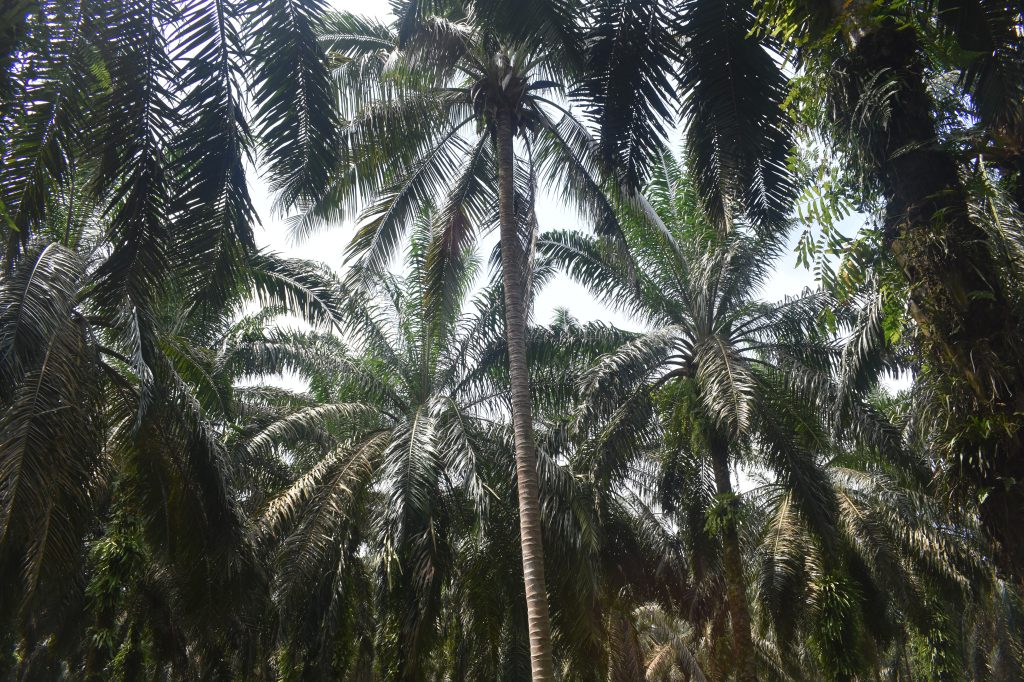
*an excerpt, reformatted and repurposed from my full field note on July 18th, 2021
* all names here are changed
The cobra snake hissed at us, I was only feets away from it. This is the first time I ever saw the notorious cobra’s hood. Judging from the color and the size, it’s definitely the equatorial spitting cobra. This is how I know I’m very much torn between my urbanized self and my plantation childhood; I just stood there, freezing, and said a meek, “uh, hello, snake?” The palm oil workers looked at me and were not sure if they should have laughed or smacked me with their machete for my stupidity.
Eventually the snake ran off, of course it would be more afraid of humans than we would to it. One of the workers want to kill the snake, but another didn’t let him. “It’s for the rats.” Which is true. After the snake mishap cooled down, the workers gathered their work. It’s noon already, I have watched them ndodos (picking down the palm fruits off the tree) because every weekend is the harvesting time. Djono, one of the workers, taught me how — just in theory, not in practice — and how heavy the TBS/tandan buah segar (FFB/fresh fruit bunch) are. “This one is possibly 45 kg (100 lbs).” I told him I watched this TikTok video from a palm oil worker (yes, you read it right) in Sanggau, that he got 75 kg (165 lbs).
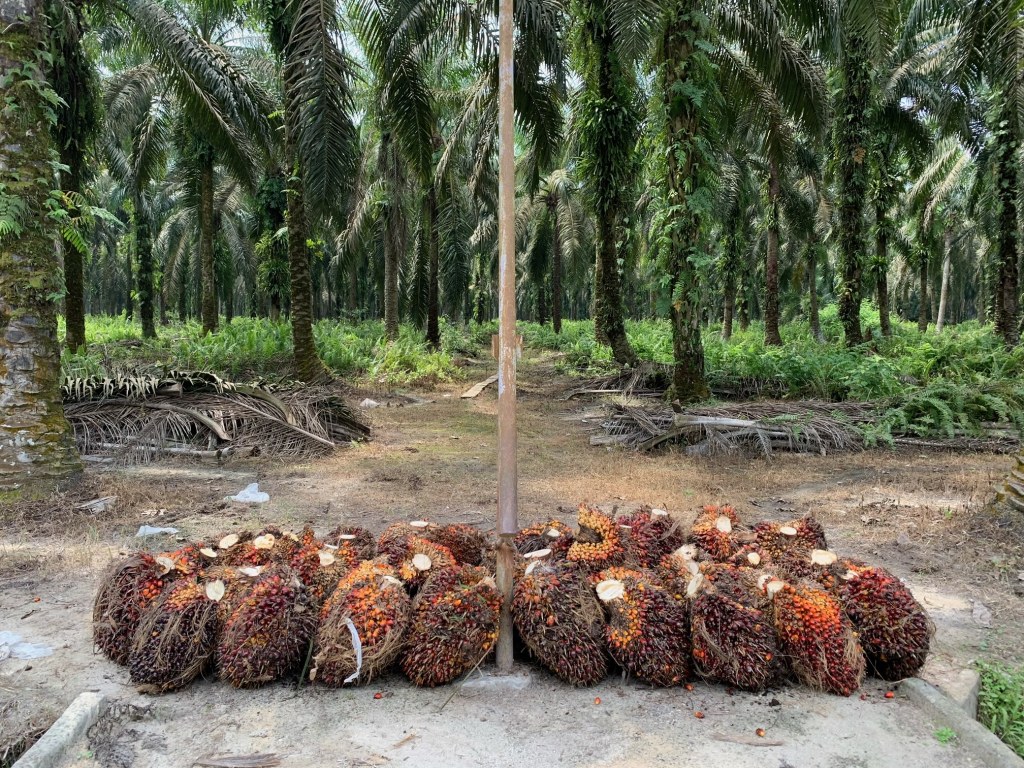
palm oil fruits, lined up in front of the scale
“The older the palm oil trees, the taller they get**, the heavier their FFB may be, but the oil substance is decreasing.” Djono also taught me how to tell if the FFB are almost rotten, unripe, and good. “You can tell from the colors. Don’t get too orange, don’t get too dark, don’t get too maroon-ish for the younger FFB” to pick up. And you can only ndodos sawit if the individual fruits have come off to the ground (brondolan). “The minimum requirements are five brondolans.” What will happen if the FFB is rotten. “The company will still take it,” he paused then smiled, “there is nothing can be wasted from palm oil, truly.”
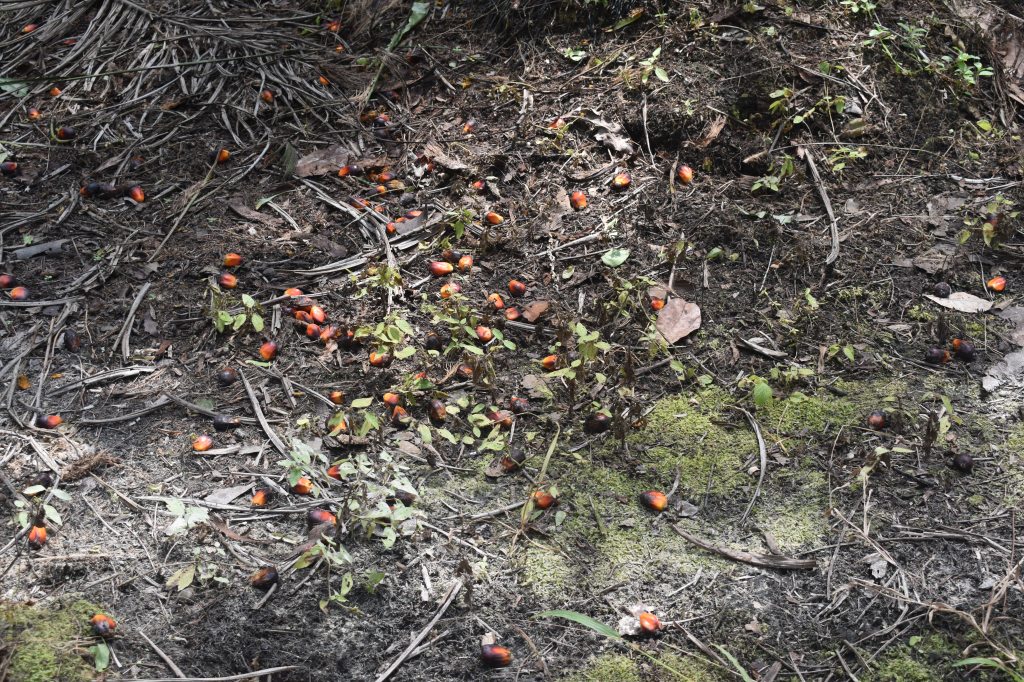
A bunch of Brondolan. Some people (especially the poor workers and the non-owners) make a business out of this.
Except some displaced indigenous lives, I replied in silence bitterly. I hold no anger to Djono anyway; he’s a transmigrant — or a child of one since it was his father that brought him here. He, just like so many East Javanese I met here, moved thousand miles away under the promise of better lives. And at least in most of their cases, that promises are delivered — just barely and sufficiently. And for a few, it is a generational wealth upward mobility.
I went around for a while until the scaling (which typically happens around 2-3 pm, before the fruits will be put into a truck). What hardwork. Picking up FFB which can weigh up to 75 kg, all on your own, or at least two people. Packing up the FFB into the truck so it won’t fall (the FFB are really heavvy, it couldn’t possibly fall out easily of the truck). The workers are different now in scaling and packing because this time it is from the distributors. Young men, not even older than I am. I apologized for causing troubles with my presence and I asked their permission for taking their pictures. One of them laughed, “Can you make the pictures viral, Kak (sister)? Hopefully if people see me, they’ll take a pity of me, and they will help me. And I’ll be rich with their pity money.” Other workers laughed and mocked him for being delusional.
Twilight. I drove my car. It’s 56-mile drive back home, and I had been exhausted by the heat and following the workers all day. As I passed the highway, I saw some blank spots — a regular large bush — and I got anxious all of sudden. Will this area become plantations some day? I remember how Djono told me that these palm oils are water thieves; nothing could grow next to them. A smallholder planted two coconut trees inside his plot (where Djono and I were); one of them died and one of them has grown so pitifully with no fruits to bear. In front of the plots, there are a bush of lime trees; not only they cannot grow, they dry up.
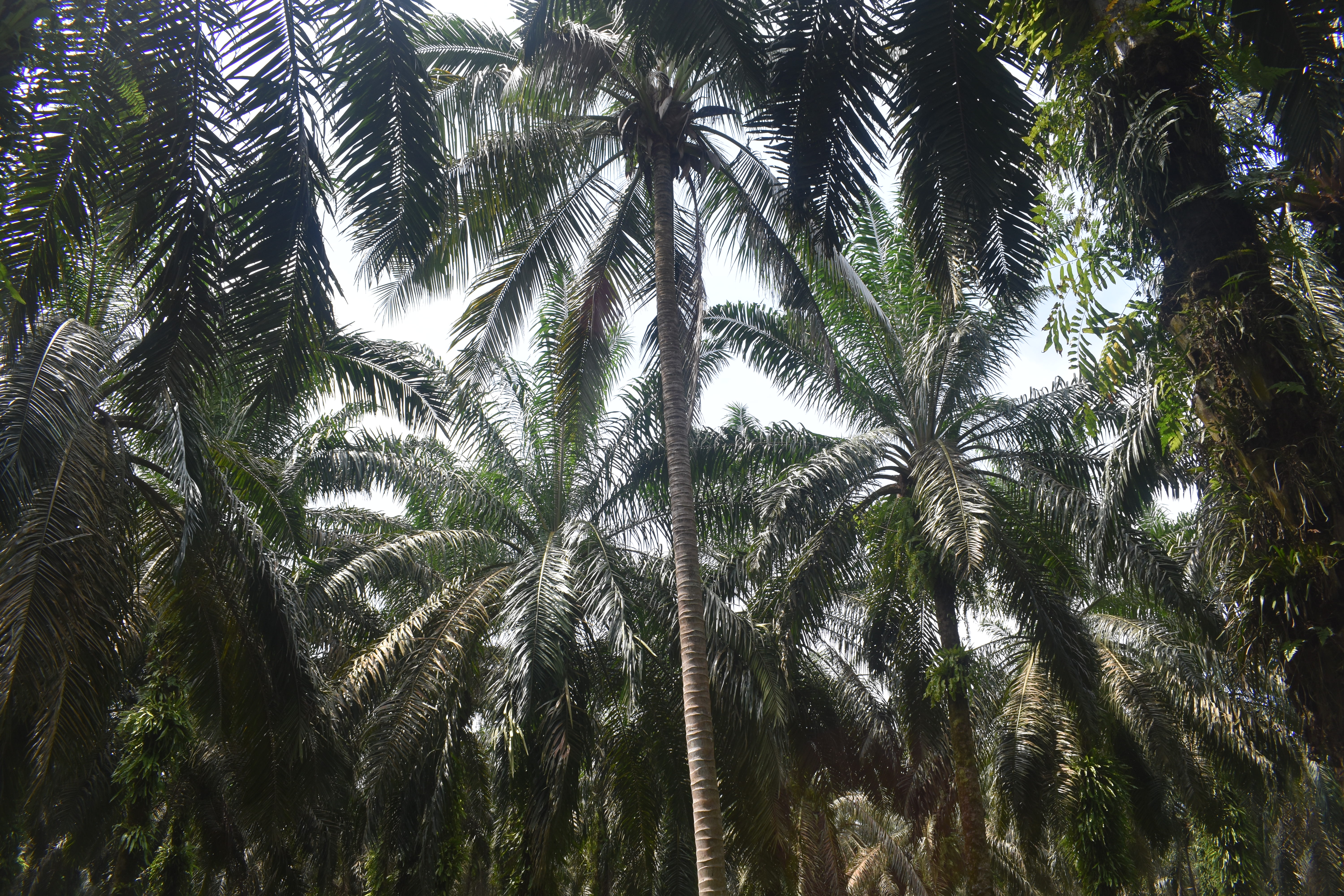


The coconut tree in question. The trunk is too small for a tree that has grown for over 15 years
Will the people dry up too? Palm oil trees can only grow for so long. The back of the palm oil workers wouldn’t last for every 75 kg each day.
** although there is a correlation between tree maturity and the height, measuring palm oil trees’ ages are a bit tricky
 Pravda Palma
Leave a comment